Home / Plaster repair
Plaster repair for older Ontario homes
Plaster cracks, bulges and crumbling corners can usually be saved. We stabilise what is sound, rebuild what is not, and skim the surface so the wall reads as one flat plane again.
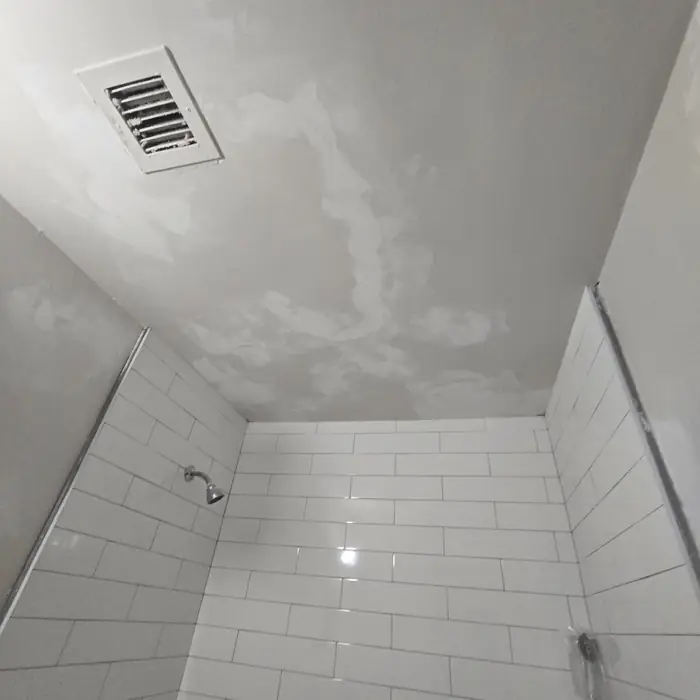
Included
What this covers
- Hairline and structural cracks opened, taped and filled
- Loose or bulging plaster re-secured or cut out
- Holes filled back level with the surrounding wall
- Skim coating over rough, patched or wallpaper-damaged walls
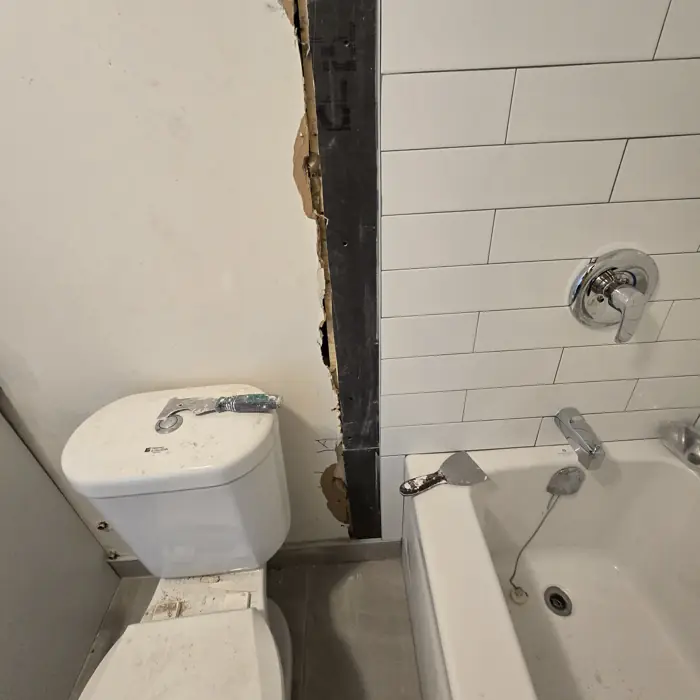
- Blending new drywall into existing plaster
- Ceilings, corners and around tub and shower surrounds
Process
How the job goes
You get a written scope before we start, and the same person on site every day.
- Check what is still solidWe press and tap the wall to find where plaster has let go of the lath. Sound plaster stays.
- Stabilise or removeLoose areas are re-fastened or cut back to a firm edge. Cracks are opened so the filler has something to grip.
- Rebuild and tapeDeep areas are filled with setting compound in lifts. Cracks get tape so they do not come back with the seasons.
- Skim and finishA thin coat over the whole area hides the transition between old and new. Then primer and paint.
Questions
Plaster repair FAQ
Should I repair plaster or replace it with drywall?
If most of the plaster is still tight to the wall, repair is faster, cleaner and cheaper than tearing it out. Replacement makes sense when large areas have come loose or the wall is being opened anyway for wiring or insulation.
Why do my plaster cracks keep coming back?
Filler alone does not stop a crack that moves with humidity. The crack needs to be opened, taped and coated wide. We do that on every crack repair.
What is skim coating?
Skim coating is a thin layer of compound trowelled over an entire wall or ceiling to make a rough or patchy surface smooth. It is the fix for walls damaged by wallpaper removal, many old patches, or uneven texture.
Is the work dusty?
Sanding makes dust. We close off the room, cover floors and furniture, and clean up before we leave. Wet sanding is used where it makes sense.